Tuesday, September 11, 2012

SEOS Project: Getting Started


I actually started the research on this project a while ago, so for this post I'll be playing a little bit of catch up and getting everyone up to speed on the progress I've made so far.

Originally in my search for another speaker project to work on I came across this thread about "Econowave" speakers. The idea behind them is to use a compression driver with a waveguide paired with a large woofer, resulting in high sensitivity that allows playback at reference levels with low power requirements. Additionally, the waveguide controls the directivity of the tweeter, narrowing it to reduce unwanted reflections, especially in the vertical plane.

Another resource I found as I was looking at these kind of speakers was the Pi Speakers website which uses the same idea although arguably in a more polished form.

Once I had decided that the constant directivity (CD) speaker was the way to go, the next step was to start figuring out what I wanted out of them, and from there which components to use.

Really my only requirement is that the speakers play low enough to crossover to a sub at 80Hz, which even with a sealed design should be doable. Since I don't plan to listen at reference levels (peaks up to 105dB from the main speakers and 115dB from subwoofers), that is a secondary concern, but with the high sensitivity of constant directivity speakers, it's a very achievable goal. Finally, since my goal is to never have to replace these, I set the budget to around $300 per speaker for electronics.

With that said, here are some of the options I considered when choosing components for this project:

Waveguides
QSC PL-000446GP Replacement Waveguide Horn for HPR152i ($35)
SEOS ($30) (http://www.diysoundgroup.com/waveguides/seos/plastic-seos-matte.html)
Dayton H6512 ($7)


Compression Drivers
B&C DE250 ($130) (http://www.parts-express.com/pdf/294-605.pdf)
Denovo DNA 360 ($75) (http://www.diysoundgroup.com/drivers/tweeters/dna-360.html)
Denovo DNA 350 ($57) (http://www.diysoundgroup.com/drivers/tweeters/dna-350.html)
Selenium D220Ti ($50) (http://www.parts-express.com/pdf/264-270s.pdf)


Woofer
Eminence Deltalite-II 2512 ($150) (http://www.eminence.com/pdf/DeltaliteII_2512.pdf)
Eminence Delta Pro 12A ($135) (http://www.eminence.com/pdf/Delta_Pro_12A.pdf)
Eminence Delta 12LFA ($100) (http://www.eminence.com/pdf/Delta_12LFA.pdf)
Dayton Audio PA310-8 ($65) (http://www.parts-express.com/pdf/295-032s.pdf)

The Dayton woofer and Selenium compression driver were used in quite a few of the Econowave designs, which is why they show up here along with the QSC horn. That pairing would have been my initial choice based on their price and the success people have had with them in the past, but after looking around some more I came across the SEOS project. The waveguide measured very well, and the DNA compression drivers offered alongside them are very comparable to the much more expensive B&C DE250.

With the SEOS and the DNA-360/350 looking like the best option for the high end, I wanted to find a woofer that could keep up, so I finally settled on the Eminence 2512 which offers better sensitivity, power handling, and extension than the Dayton (or some of the other Eminence offerings).

As of right now I've ordered the SEOS and DNA-360 as well as the 2512s (which just came in), and I'll be starting measurements and modeling the speakers so I can begin designing the crossover.


That was a pretty dense post, since I had to cover a lot of progress all at once, but it'll be a little more broken up in the future (and there will be more pictures once I get my camera from home).

Wednesday, April 4, 2012

Subwoofer Feet


Well, it's been a while since the last update, but it's finally here! I just got in a set of feet to finish off my subwoofers (for now). I was eyeing some nice satin nickel spikes, but instead opted for some much less expensive rubber feet since I was fairly certain the spikes would have absolutely no affect on the performance of the speakers. Below are the feet in their packaging.


To install the feet, I first marked the bottom of the cabinets. Instead of measuring every corner, I marked on a scrap of paper (making sure to denote the corner) as a template, and just used a screwdriver to make a divot in the cabinet after aligning the paper.


Next I drilled some pilot holes, and moved up to the full sized bit for the threaded inserts. Then I put a dab of glue on the insert and screwed them in. Finally I screwed in the feet, and I was done. I was surprised at what a difference it made in appearance. The floating look makes them look much more professional than before, and I'm very pleased.


Since I was curious to see if the feet made any difference in the frequency response of the speakers I went ahead and measured before and after. As expected, there was almost no difference in terms of the performance. However, lifting the bottom of the cabinet off the ground did help prevent some of the vibrations from carrying through into the room, which I consider an improvement.


Wednesday, December 7, 2011

New Finish on Overnight Sensations


It's been a while since I last posted, but here's a small update on my Overnight Sensations project. After a while of looking at these guys sitting on my desk, I decided that the finish was beginning to look pretty flat, and once the Danish oil had completely cured, the wood ended up with an almost sickly dry look to it. I had great success with the Wipe-on-Poly I used with my MFW-15 subs, so I got some more to bring some new life to my bookshelf speakers. I opted for the satin finish since I didn't want the speakers to jump out too much, and it ended up being the right way to go. There's just enough sheen to add depth and give the wood that "wet" look, but without blinding you. I'm very happy with the result.

You can see some of the original finish in my build log here: Overnight Sensations Build Log.

Monday, August 22, 2011

Pioneer VSX 1020-K


I finally took the plunge and got myself a new receiver to take advantage of the HD audio formats on Bluray. After weeks of agonizing over which receiver to get, I finally landed on the Pioneer VSX-1020-K mostly based on price. Being last year's model, it was a steal, and still had all the features I wanted (and then some).

My main requirement was just that the receiver had HDMI connectivity, since I wanted to see what I was missing with the lossless audio tracks on Bluray. Since almost every receiver made recently has HDMI connectivity, that did little to narrow down the field. After HDMI, I wanted two zone support so I could power my desktop speakers from the same receiver, and finally I wanted a receiver with some room correction software to play around with. After lots of comparisons, I ended up with the 1020-K since it was the least expensive of the models I was contemplating.

Aside from the features I was looking for, this receiver includes networking functions and internet radio which I'm looking forward to messing around with in the future. For now, what's been taking up much of my time is fiddling with the Advanced MCACC room correction software that comes installed on the 1020-K. The receiver comes packaged with a small calibration microphone that it uses to adjust channel levels, time delay, equalization, and standing wave compensation.

My first impressions of the settings made by MCACC are favorable. It set all the channel levels and distances spot on. The EQ is a more subtle effect-- nothing like the night and day differences I read about everywhere, but I think it improved the clarity of the sound, and overall I'm very pleased. Now I just need to figure out how to interpret the reverberation graphs it generates so I can properly set the time capture, and hopefully improve the room correction.

Overall my experience with the Pioneer VSX 1020-K has been very good, aside from some shipping shenanigans (not a fault of the receiver itself).

Thursday, July 28, 2011

Sub Project: Lookin' Good

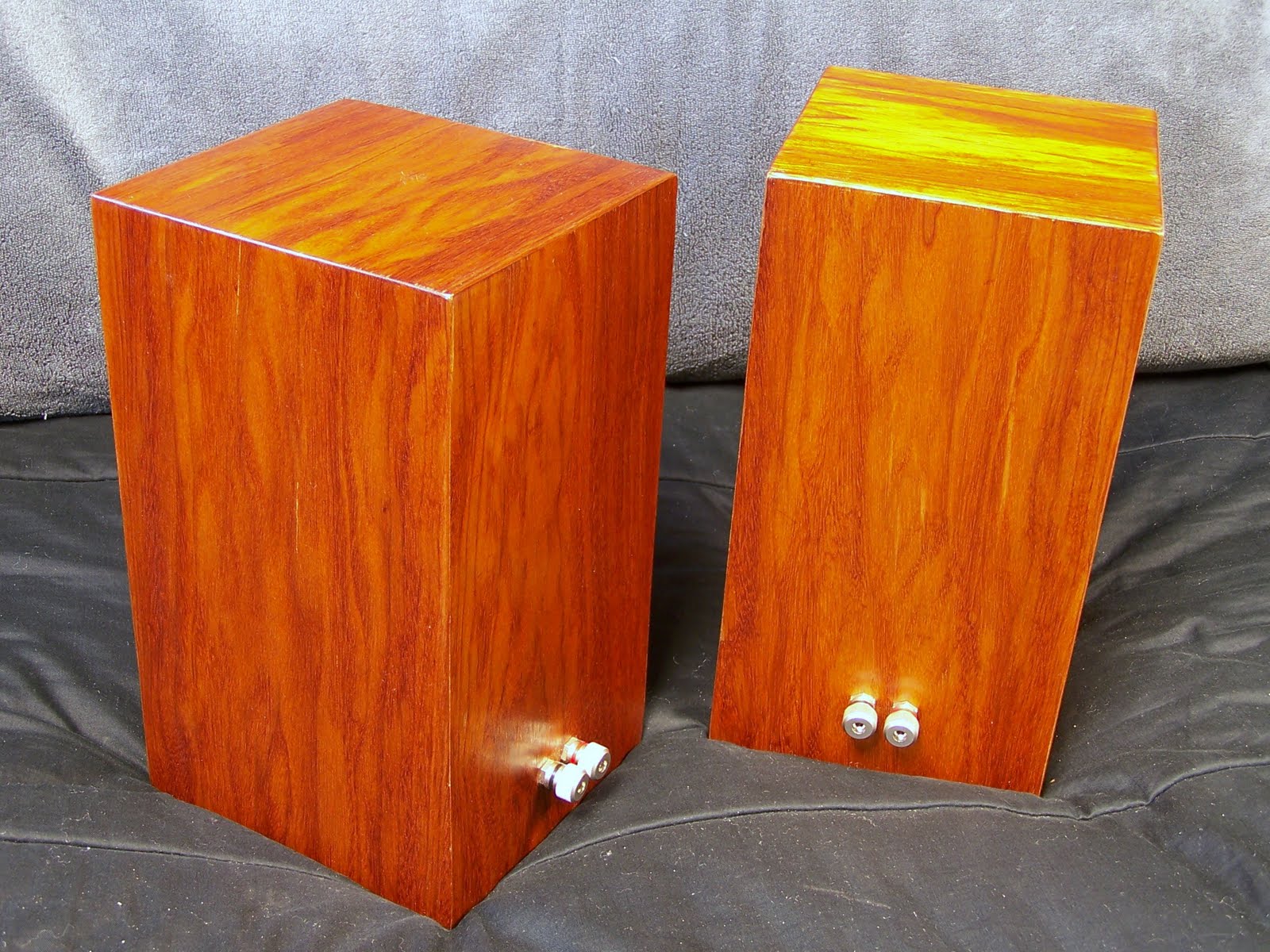
At last! Here they are in all their glory. They turned out much better than I could have hoped, and I just can't stop looking at them. I'll shut up now so you can enjoy the speaker porn.


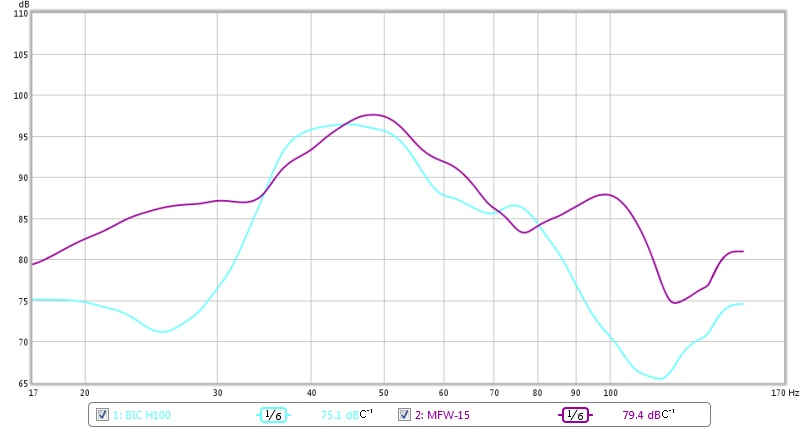
I did take some quick measurements comparing these with my old subwoofer. I'm beginning to think there's some pretty heavy room interaction causing that peak at 50 Hz since it affected both setups (one of the MFW-15's is in the same position as the H100 was). I didn't add any offset to these measurements, and I tried to match the levels as closely as possible, so you can see that I don't lose any output at all from the switch to sealed from ported (not too surprising since I added a second sub). I did gain a lot of extension, though, which is what I was after.

I hope everyone enjoyed watching this process as much as I enjoyed carrying it out. I'll keep you up to date on any new projects I come up with, but for now I'm taking a break.

Tuesday, July 26, 2011

Sub Project: Almost There...

I finally managed to get through the finishing process. I know I had originally planned to put about 8-9 layers of topcoat on these, but it turns out they look pretty good after just three (and a fourth light one on the top and front). While I had them disassembled for finishing, I did a couple other things that I neglected to do the first time around.

The first of which was just because I had planned to open them up again, and that was adding bracing from the top to the bottom. I don't think it was an issue when I had them hooked up earlier, but I had the wood, and there was no reason not to. These things were solid as a rock before, and now they're even more so.

Next was something that I decided not to do at first, but ended up wishing I had done, and that was soldering the internal wires to the connector. The crimp on terminals I used didn't fit very well, and I was afraid they would come loose eventually. Now I don't have to worry about that.

I'll put up some beauty shots when they're fully assembled, and then do some more measuring when they're back in the system. I'm going to take the opportunity to compare these to my BIC Acoustech H100 (a ported 12" woofer). I'll do the normal frequency response, and try to work through some THD measurements.

Monday, July 18, 2011

Sub Project: Stain Sneak Peek

Here's a crummy photo of the freshly stained subs. They look a little dull right now, but the color is right, and it'll really pop once it gets that "wet" look from the topcoat. It'll be a little while before they're up and running again, since I'm looking to put 8-9 coats of wipe on poly on these, and I'll only be able to do about one a day. In spite of my amateur staining, I think they should turn out nicely.

Just a note: they don't look as red (or as blurry) in person. I'll do a better job of capturing the color once they're finished.